

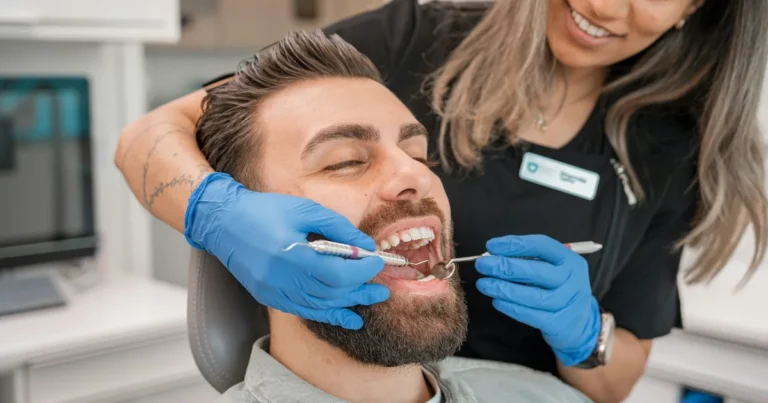
Root canal therapy is a dental procedure that removes inflamed or infected pulp from inside a tooth, then cleans, disinfects, shapes and seals the root canal system. The pulp is the soft tissue in the centre of the tooth that holds nerves and blood vessels. The goal is to save a natural tooth that might otherwise need to be pulled out.
People usually need treatment because of deep decay, a crack, an injury or an infection that has reached the pulp. Many patients worry about pain, time and recovery. Modern root canal treatment is done under local anesthetic, and most people feel pressure rather than sharp pain.
Every case is different. The tooth, how severe the infection is and your oral health all affect how long treatment takes and how recovery feels. This guide from O’Ville Dental in Orangeville explains the signs to watch for, the root canal treatment steps, whether a root canal is painful, how long it takes and what after root canal care involves. If you have tooth pain that will not settle, swelling or other worrying symptoms, book a dental assessment.
What Are the Signs You May Need Root Canal Therapy?
Signs you may need root canal therapy include ongoing tooth pain, sensitivity to hot or cold that lingers, pain when biting, swollen gums, a darkening tooth and a pimple-like bump on the gum. Some teeth that need treatment cause few or no symptoms.
Persistent or severe tooth pain
Inflammation or infection inside a tooth can cause constant, throbbing or recurring pain, sometimes with no obvious trigger. Toothache has many causes, so pain alone does not mean you need a root canal.
Lingering sensitivity to hot or cold
Discomfort that lasts after the hot or cold food or drink is gone can point to an inflamed pulp. A dentist needs to check the cause.
Pain when biting or chewing
Inflammation around the root tip, cracks and other problems can make a tooth hurt when you bite down.
Swollen or tender gums
Infection around a root can cause swelling or tenderness near the tooth. A small pimple-like bump on the gum may be a draining infection.
Tooth discolouration
A tooth may turn grey or darker after an injury or pulp damage. Colour change alone does not confirm that treatment is needed.
Cracked or damaged teeth
Deep cracks, fractures or major damage can expose or harm the pulp. Get an injured tooth checked early.
Infection without much pain
Some teeth with a dead or infected pulp cause little discomfort. Problems may only show up during an examination or on an X-ray.
When to seek urgent care
Book a prompt dental assessment for persistent pain, swelling or a suspected infection. Our Emergency Dentistry page explains how urgent dental problems are handled. Facial swelling that spreads quickly, or trouble breathing or swallowing, needs emergency medical care: call 911 or go to the nearest emergency department.
You cannot diagnose the need for a root canal from symptoms alone. A dental examination is needed.
Why Is Root Canal Treatment Necessary?
Root canal treatment is needed when the pulp is irreversibly inflamed, infected or has died, and the tooth can still be restored. Removing the diseased pulp helps control infection and lets you keep the tooth.
Understanding the dental pulp
The pulp contains nerves, blood vessels and connective tissue. It helps the tooth grow when you are young. The American Association of Endodontists explains that a fully developed tooth can survive without its pulp, because the surrounding tissues keep it nourished.
Deep tooth decay
Untreated decay can work through the enamel and dentin until bacteria reach the pulp, causing inflammation or infection that may not heal.
Cracked or fractured teeth
Cracks let bacteria into deeper parts of the tooth. Where the crack is and how far it goes affect whether treatment is possible.
Repeated dental procedures
Several large fillings or repeated work on one tooth can sometimes irritate the pulp. Not every heavily filled tooth needs a root canal.
Dental trauma
A knock can damage the pulp even without a visible crack. Injured teeth may need monitoring over time.
Removing infection and keeping the tooth
Root canal therapy removes the diseased tissue and helps control infection inside the tooth. Keeping your natural tooth helps you chew normally and avoids some of the problems that follow tooth loss.
What if treatment is delayed?
An untreated infection can get worse and may lead to more pain, an abscess or damage to nearby tissues. How quickly this happens varies, so seek advice rather than waiting.
| Comparison | Root Canal Therapy | Tooth Extraction |
| Primary purpose | Treat the affected pulp and keep the natural tooth | Remove a tooth that cannot or should not be kept |
| Tooth preservation | Keeps the natural tooth when treatment succeeds | Removes the natural tooth |
| Follow-up treatment | May need a permanent filling or crown | May involve discussing replacement options |
| Suitability | Depends on tooth condition, restorability and root anatomy | May be advised when saving the tooth is not feasible |
| Long-term considerations | Needs a proper restoration and ongoing dental care | Replacement may be considered to restore function |
The clinical findings, the tooth’s condition, your preferences and the long-term outlook all shape the right choice. Root canal therapy is not always better than extraction.
What Happens During a Root Canal Procedure?
During a root canal procedure, your dentist numbs the tooth, removes the inflamed or infected pulp, cleans and shapes the canals, then fills and seals them to lower the risk of reinfection. Here are the main root canal treatment steps.
- Examination and diagnosis: Your dentist reviews your symptoms, examines the tooth and takes X-rays. Simple tests help show the health of the pulp and surrounding tissues.
- Local anesthetic: The area is numbed. A very inflamed tooth can be harder to numb, so your dentist may adjust the approach.
- Isolating the tooth: A thin rubber sheet called a dental dam is placed around the tooth to keep it dry and free of saliva.
- Making an access opening: A small opening is made in the top of the tooth to reach the pulp chamber and canals. Its size and position vary with the tooth.
- Removing the pulp: Specialized instruments remove the diseased tissue while keeping as much healthy tooth as possible.
- Cleaning and shaping: Small instruments and disinfecting solutions clean and shape each canal. Canal shapes vary a lot between teeth.
- Filling and sealing: The canals are filled with a rubber-like material called gutta-percha and a sealer.
- Temporary or permanent restoration: A temporary filling may be placed first. Your dentist then decides whether a permanent filling, crown or other restoration is best.
- Follow-up and final restoration: Completing the final restoration protects the tooth. Follow-up visits check healing.
Learn more about our Root Canal Therapy service.
Is a root canal painful?
For most people, no. Local anesthetic numbs the tooth, and patients usually feel pressure or vibration rather than sharp pain. The American Association of Endodontists says most patients report feeling comfortable during the procedure.
Some people do feel discomfort during or after treatment, especially when there is a lot of inflammation or infection. Tell your dentist right away if you feel pain, so they can give more anesthetic. If you feel nervous, ask about relaxation options. Our article explains how nitrous oxide helps patients relax.
How Long Does Root Canal Therapy Take?
Root canal therapy can take one or more appointments, based on the tooth, the shape and number of its canals and whether there is an infection. The Canadian Dental Association notes that treatment may take one or two appointments.
Type and position of the tooth
Front teeth usually have one canal. Molars can have three or more, with more complex shapes, so they often take longer.
Number and shape of the canals
Narrow, curved, blocked (calcified) or unusual canals can add time.
Infection or inflammation
Some infections need medicine placed inside the canals between visits, or extra steps.
First treatment vs. retreatment
Re-treating a tooth that has had a root canal before is often more complex.
One visit or several
Some root canals can be finished in one visit, while others need two or more. Your dentist decides based on what they find.
The final restoration
A crown is often placed at a separate appointment.
| Treatment Situation | Appointment Considerations |
| Front tooth with straightforward anatomy | May need less time than a complex molar |
| Molar with several root canals | May need a longer appointment |
| Tooth with a significant infection | Extra treatment or appointments may be needed |
| Previously treated tooth | Retreatment may add complexity |
| Tooth needing a dental crown | A separate restorative appointment may be needed |
Ask your dentist for an estimated schedule for your tooth. For cost factors, see our guide to root canal costs in Ontario.
What Should You Expect During Recovery After Root Canal Treatment?
After root canal treatment, mild tenderness or sensitivity around the tooth is common for a few days and should gradually improve. Good after root canal care helps the tooth heal and protects it until the final restoration is placed.
Mild pain or tenderness
Biting or chewing may feel sore for several days. Discomfort should get better each day, not worse. The American Association of Endodontists notes that symptoms usually improve within three to five days.
Numbness
Your mouth may stay numb for a few hours. Avoid chewing until feeling returns so you do not bite your cheek, lip or tongue.
Eating
Follow your dentist’s advice about when and what to eat. Avoid hard or sticky foods on a tooth with a temporary filling or one waiting for its final restoration.
Managing discomfort
Your dentist may suggest suitable over-the-counter pain relief. Your medical history, allergies and other medications affect the right choice, so follow professional advice and the product directions.
Oral hygiene
Keep brushing and cleaning between your teeth, being gentle around tender areas.
Protecting the treated tooth
A tooth waiting for its final restoration can break more easily. Avoid heavy chewing on it, and complete the recommended restoration. Many back teeth need a crown after a root canal. Learn more about our Crowns & Bridges service.
When to contact your dentist
- Severe or worsening pain.
- Swelling that persists or increases.
- A temporary filling that loosens or falls out.
- A bite that feels uneven or uncomfortable.
- Symptoms that do not improve as expected.
- Symptoms that come back.
Significant facial swelling with trouble breathing or swallowing needs emergency medical care.
Long-term care
A root canal-treated tooth still needs brushing, cleaning between teeth and regular Checkups & Cleanings. A proper final restoration and good daily care support the tooth over the long term. Recovery varies between people, and success cannot be guaranteed in every case.
Root Canal Therapy in Orangeville
A dental examination is the best way to find out whether root canal therapy is right for your tooth and what to expect.
If you are looking for a dentist in Orangeville, O’Ville Dental offers Root Canal Therapy. If you are in significant pain, we prioritize a same-day assessment. Treatment is done under local anesthesia, and nitrous oxide sedation is available if you would like help relaxing. If you choose it, please arrange a ride home. Cases involving severe calcification, complex anatomy or retreatment may be referred to an endodontist.
Call us to confirm treatment suitability, costs, coverage and appointment availability.
Frequently Asked Questions
What is root canal therapy and why is it needed?
Root canal therapy treats inflamed, infected or damaged pulp inside a tooth. The dentist removes the affected tissue, cleans and seals the root canals and restores the tooth. It is recommended when the pulp cannot recover but the tooth can still be saved.
Is root canal treatment painful?
Root canal treatment is usually not painful, because it is done under local anesthetic. You may feel pressure or mild sensations during treatment and some tenderness afterward. Experiences vary, so tell your dentist about any pain or anxiety.
How long does a root canal procedure take?
The tooth’s position, how many canals it has, their shape and how complex the case is all affect the time. Some root canals are finished in one appointment, while others need several visits. Ask your dentist for an estimate for your tooth.
How long does it take to recover from a root canal?
Mild tenderness usually improves within several days, although recovery varies. Follow your aftercare instructions, avoid heavy chewing on the treated tooth and contact your dentist if pain or swelling gets worse or does not settle.
Will I need a dental crown after root canal treatment?
Many root canal-treated teeth need a crown, especially back teeth with significant damage, because they take heavy chewing forces. Not every treated tooth needs one. Your dentist will recommend a restoration based on how much tooth remains, where it is and your bite.
Getting Relief and Saving Your Tooth
Root canal therapy can relieve pain from an inflamed or infected pulp and help you keep your natural tooth when it can be restored. Early assessment, a clear treatment plan and good aftercare help the tooth last.
Dealing with tooth pain, swelling or sensitivity that will not go away? Book an assessment so we can find the cause and explain what treatment, timing and recovery would look like for you. Bring any questions about discomfort or anxiety. Request an appointment to discuss root canal therapy and appointment availability.
This article is general information, not dental advice for your situation. Speak with a dentist about your own symptoms and treatment options.