

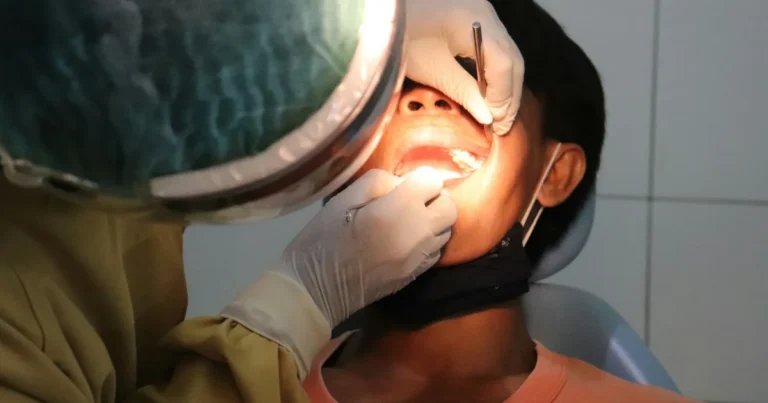
Fluoride treatment is a preventive dental procedure in which a concentrated fluoride product, such as a varnish, gel or foam, is applied to the teeth to help protect the enamel. Fluoride is a naturally occurring mineral that helps put minerals back into weakened enamel, making teeth more resistant to the acids that cause decay.
Using fluoride for teeth is a well-studied way to lower cavity risk. A professional fluoride application delivers a stronger dose than everyday products and may especially help children and adults who are more likely to get cavities.
The fluoride treatment benefits are real, but they have limits. A treatment cannot permanently prevent cavities, repair an existing cavity or replace daily brushing with fluoride toothpaste, cleaning between your teeth and regular dental check-ups. At O’Ville Dental in Orangeville, we look at your cavity risk to decide whether professional fluoride makes sense for you or your child.
How Does Fluoride Strengthen Tooth Enamel?
Fluoride strengthens tooth enamel by helping replace minerals lost to acid and by making the enamel harder for acid to dissolve in future. The CDC explains that fluoride replaces lost minerals and makes the outer enamel harder to dissolve.
Understanding tooth enamel
Enamel is the hard outer layer that protects the softer parts of the tooth. It is made mostly of minerals, and those minerals can be lost when acid touches the tooth.
What causes enamel to lose minerals?
Bacteria in plaque feed on sugars and produce acids. Those acids pull minerals out of enamel, a process called demineralization. Frequent acid attacks can eventually lead to a cavity.
How fluoride supports remineralization
Remineralization is the natural repair process that puts minerals back into weakened enamel. Fluoride helps this process along, building a stronger surface.
Making teeth more resistant to acid
Enamel that has taken up fluoride is better at resisting future acid attacks. The protective effect relies on regular, appropriate fluoride exposure and good daily habits.
Fluoride and early decay
The Canadian Dental Association notes that fluoride can reverse early signs of tooth decay, often seen as chalky white spots. Once a hole (cavity) has formed, fluoride cannot rebuild the lost tooth, and a filling or other treatment is needed.
Fluoride in daily care
Fluoride toothpaste is the main everyday source. Many communities also add fluoride to tap water. Health Canada explains how community water fluoridation helps reduce decay. Professional fluoride adds extra protection for people at higher risk.
What Are the Main Benefits of Professional Fluoride Treatment?
The main benefits of professional fluoride treatment are a lower risk of cavities, stronger enamel, help with early enamel damage and extra protection for people at higher risk. It is quick and non-invasive.
Helps reduce the risk of cavities
Fluoride helps protect teeth against mineral loss and supports repair. It may be most useful for people at higher cavity risk.
Strengthens enamel
It helps enamel resist acid attacks.
Supports early repair
It can help manage early areas of mineral loss before a cavity forms.
Extra protection for higher-risk patients
Professional fluoride may be recommended for people with:
- Frequent cavities.
- Dry mouth.
- Exposed tooth roots.
- Braces or other appliances.
- Difficulty keeping teeth clean.
- Medical conditions or medications that raise cavity risk.
Protects exposed roots
When gums recede, the root surface is exposed. Roots are softer than enamel and decay more easily, and fluoride can help lower that risk.
Quick and non-invasive
Application is usually brief and does not involve drilling or local anesthetic.
Fits into routine care
Fluoride can be part of a personalized preventive plan alongside your regular visits.
| Fluoride Treatment Benefit | How It Helps | Patients Who May Benefit |
| Cavity prevention | Reduces enamel mineral loss and supports repair | Children and adults at higher cavity risk |
| Enamel protection | Improves resistance to acid attacks | People with frequent acid exposure |
| Early decay management | Helps remineralize early, non-cavitated enamel changes | People with early enamel changes |
| Root surface protection | Helps protect exposed roots against decay | Adults with gum recession |
| Extra preventive care | Adds to daily fluoride toothpaste use | People who need extra cavity protection |
Your risk factors, other fluoride sources and your daily habits all shape the benefit. Fluoride cannot stop every cavity.
Who Should Consider Fluoride Treatment?
Children and adults with a higher risk of tooth decay are the most likely to benefit from professional fluoride treatment. Your dentist decides based on your individual risk, not just your age.
Children with developing teeth
Fluoride helps protect enamel during childhood. Dentists consider age, dental development and other fluoride sources before recommending treatment. Read more about children’s dentistry in Orangeville.
Teenagers
Diet, oral hygiene, braces and cavity history all affect whether a teen will benefit.
Adults with frequent cavities
Adults who keep getting new decay may benefit from regular professional applications.
People with dry mouth
Saliva helps wash away food and neutralize acid. Medications, some medical conditions and certain treatments can reduce saliva, which raises cavity risk.
People with exposed roots
Gum recession exposes root surfaces that decay more easily than enamel.
People with braces or aligners
Brackets and wires trap plaque, making cleaning harder. Fluoride can help protect enamel during treatment, including with Invisalign aligners when risk is higher.
Older adults
Gum recession, dry mouth, older fillings and difficulty cleaning can all raise cavity risk with age.
People with special oral care needs
Some people find daily cleaning difficult or have health conditions that increase their risk.
People with low cavity risk
Not everyone needs extra professional fluoride. People with good oral hygiene and low risk may not need the same schedule as higher-risk patients.
What Happens During a Professional Fluoride Application?
A professional fluoride application is quick and generally painless. Your dental professional checks your risk, prepares your teeth, applies the fluoride product and gives you aftercare instructions.
- Examination and risk check: Your dental team looks at your oral health, cavity history, other fluoride sources and risk factors.
- Preparing the teeth: Teeth may be cleaned or dried, depending on the product.
- Applying the fluoride: Fluoride may be applied as a varnish, gel or foam. Varnish is usually painted onto the teeth with a small brush. Gels and foams are often placed in a tray that sits over the teeth.
- Letting it work: Timing and handling vary by product. Follow your dental professional’s instructions.
- Aftercare instructions: You may be asked to avoid eating or drinking for a short time, and other precautions vary by product.
Is it painful?
Not usually. It is generally painless and non-invasive. Some people notice a taste or a slightly sticky coating, especially with varnish.
How long does it take?
The application itself is usually brief. Your total appointment time reflects what else is done at the visit.
Learn more about our Fluoride Treatment service.
How Often Should You Get Fluoride Treatment?
There is no single schedule for everyone. How often you need professional fluoride treatment comes down to your cavity risk, age and clinical needs.
Typical intervals
People at higher risk may be advised to have professional fluoride every three to six months. Others may need it less often or not at all. The CDC notes that fluoride varnish must be reapplied at regular intervals to stay fully effective.
What affects how often you need it
- Past cavities.
- Current oral hygiene habits.
- How often you have sugar.
- Whether you use fluoride toothpaste.
- Access to fluoridated tap water.
- Dry mouth.
- Braces or aligners.
- Gum recession.
- Medical conditions or medications.
Your dentist may adjust your schedule if your risk goes up or down. Fluoride is often applied during regular Checkups & Cleanings when it is clinically appropriate, and your dentist takes your total fluoride exposure into account so you get enough without having too much.
Is Professional Fluoride Treatment Safe?
Yes, professional fluoride treatment is generally safe for children and adults when applied appropriately. The CDC states that fluoride dental products are safe and effective when used as directed.
Safety when used appropriately
Dental professionals use measured amounts and choose products to suit each patient. For children, products and methods are chosen for the child’s age and risk, with care taken to limit how much is swallowed.
Understanding dental fluorosis
Dental fluorosis is a change in how teeth look, usually faint white specks, caused by swallowing too much fluoride while permanent teeth are still forming in early childhood. The CDA notes that most cases are mild and often go unnoticed. Fluorosis does not develop from fluoride treatments given after the teeth have fully formed.
Possible temporary side effects
Some people notice a taste, a coating feeling or mild irritation, depending on the product. Tell your dental team about any allergies or previous reactions.
Why too much fluoride should be avoided
Fluoride is helpful at the right levels, but swallowing too much can cause problems. More fluoride is not always better, and no treatment is completely risk-free.
Professional Fluoride Treatment vs. At-Home Fluoride Products
Professional fluoride gives extra protection at higher strength, while at-home products such as toothpaste give steady daily protection. Most people benefit from daily toothpaste, and some also need professional applications.
| Comparison | Professional Fluoride Treatment | At-Home Fluoride Products |
| Primary purpose | Extra cavity prevention for selected patients | Ongoing daily enamel protection |
| Common products | Fluoride varnish, gel or foam | Fluoride toothpaste and mouth rinses |
| Application | Applied by a dental professional | Used by patients following product directions |
| Fluoride strength | Often higher than standard consumer products | Varies by product and purpose |
| Frequency | Based on individual cavity risk | Toothpaste daily; other products as directed |
| Role in oral care | Adds to daily prevention | Part of everyday oral hygiene |
Some patients are prescribed a higher-strength toothpaste or other product. Use these only as your dental professional directs, and avoid doubling up on products unnecessarily.
Fluoride Treatment vs. Dental Sealants
Fluoride and sealants both help prevent cavities, but in different ways. Fluoride strengthens enamel across the teeth, while sealants physically cover the deep grooves on chewing surfaces.
| Comparison | Fluoride Treatment | Dental Sealants |
| Primary purpose | Strengthen enamel and support remineralization | Create a protective barrier over tooth grooves |
| How it works | Helps enamel resist acid-related mineral loss | Stops food and bacteria collecting in sealed pits and fissures |
| Common application | Fluoride varnish, gel or foam | Protective coating applied to selected tooth surfaces |
| Areas protected | Can benefit many tooth surfaces | Mainly pits and fissures on chewing surfaces |
| Common candidates | Children and adults based on cavity risk | Children, teenagers and selected adults with vulnerable teeth |
| Maintenance | Repeat applications may be recommended | Periodic checks and possible repair |
| Main limitation | Does not repair established cavities | Does not protect unsealed surfaces |
Many preventive plans include both, and they are not interchangeable. Learn more about our Dental Sealants service.
How to Maintain Strong, Healthy Teeth Between Fluoride Treatments
Brush twice a day with fluoride toothpaste, clean between your teeth, limit frequent sugar, stay hydrated and keep up regular dental visits.
Brush with fluoride toothpaste
Brush twice a day. For children, the CDA recommends a rice-grain-sized smear under age three for children at risk of decay and a pea-sized amount from three to six, with adult supervision.
Clean between teeth
Floss or use interdental brushes once a day to reach where your toothbrush cannot.
Limit frequent sugar
Every sugary snack or drink starts another acid attack on your enamel. Fewer, shorter exposures are better.
Stay hydrated
Drinking water supports saliva and keeps your mouth comfortable. See your dentist if dry mouth persists.
Keep up regular dental visits
Check-ups catch early decay and let your dentist review your preventive plan. Sealants may also help protect teeth with deep grooves, because fluoride alone is not enough to keep teeth healthy.
Choosing a Dentist for Professional Fluoride Treatment
Look for a dental practice that assesses each patient’s risk and explains clearly when fluoride is and is not needed.
Consider:
- Appropriate dental qualifications and registration.
- Preventive dental examinations.
- Individual cavity risk assessments.
- Age-appropriate fluoride recommendations.
- Experience with preventive care for children and adults.
- Clear explanations of benefits and limitations.
- Product-specific aftercare instructions.
- Clear information on costs.
Ask whether the practice offers fluoride varnish, gel or other professional applications.
Fluoride Treatment and Preventive Dental Care in Orangeville
A dentist can check your enamel, assess your cavity risk and tell you whether professional fluoride treatment would help, as part of preventive dental care that also includes brushing, cleaning between teeth, healthy eating and regular check-ups.
If you are looking for a dentist in Orangeville, O’Ville Dental offers Fluoride Treatment. We usually apply it as a varnish, gel or foam right after your cleaning. How often you need it reflects your own risk factors: some patients receive it at every routine visit, others less often. Afterward, you may be asked not to eat or drink for a short time, and you can carry on with your normal brushing and flossing. Many plans cover fluoride for children, while adult coverage varies, and we can help you check what your plan includes. We also offer Family Dental Services for all ages.
Call us to confirm availability, scheduling, age eligibility and costs.
Frequently Asked Questions
What is fluoride treatment and how does it work?
Fluoride treatment is a preventive procedure where a concentrated fluoride product is applied to your teeth to strengthen enamel and lower cavity risk. Fluoride helps repair early mineral loss and makes enamel more resistant to acid. It cannot repair a cavity that has already formed.
Is professional fluoride treatment safe for adults and children?
Yes, professional fluoride treatment is generally safe for adults and children when applied appropriately. Dentists consider age, cavity risk and total fluoride exposure when choosing a treatment. Swallowing too much fluoride while teeth are forming can cause dental fluorosis.
How often should you get fluoride treatment?
Your cavity risk decides how often. Some higher-risk patients benefit from applications every three to six months, while others need different intervals or no extra professional fluoride. Your dentist will recommend the right schedule.
Does fluoride treatment help prevent cavities?
Yes, fluoride treatment helps lower the risk of cavities by strengthening enamel and supporting repair. It cannot prevent every cavity, so combine it with brushing, cleaning between teeth, sensible eating and regular dental care.
What should you avoid after a fluoride treatment?
Instructions vary by product. After some fluoride varnishes, you may be asked to avoid hard or sticky foods and hot drinks for several hours. Other products have different instructions, so follow the advice your dental professional gives you.
Protecting Your Enamel for the Long Term
Fluoride treatment is a simple, well-researched way to strengthen enamel and lower cavity risk, especially for people who are more prone to decay. It works best as one part of a routine that includes daily brushing with fluoride toothpaste, cleaning between your teeth and regular check-ups.
Want to know if professional fluoride is right for you or your child? Ask us about your cavity risk and suitable preventive options at your next visit. Request an appointment to ask about professional fluoride applications and appointment availability.
This article is general information, not dental advice for your situation. Speak with a dentist about your own or your child’s oral health.