

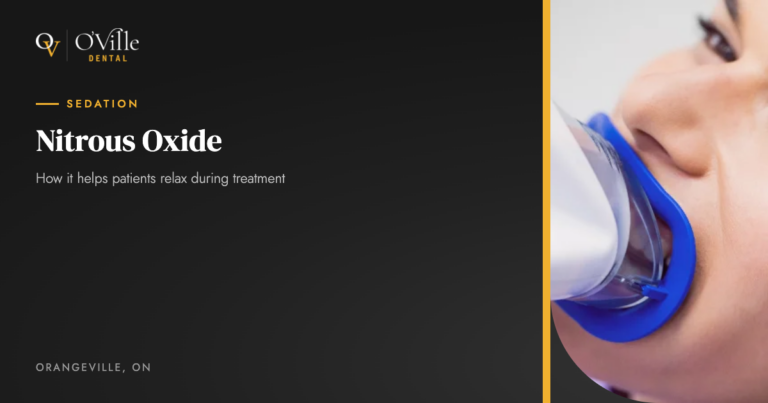
Dental anxiety can make even routine appointments feel difficult. For some children and adults, a mild form of dental sedation may help make treatment feel more manageable. Nitrous oxide is commonly used to support relaxation during dental care while patients generally remain awake, responsive and able to communicate with the dental team.
Nitrous oxide is a mild form of dental sedation that is inhaled through a small mask placed over the nose. It can help patients feel more relaxed and comfortable during dental treatment while remaining conscious and able to communicate with the dental team.
Nitrous oxide is often called laughing gas, but it does not necessarily make a person laugh or put them to sleep. It is one option for people with dental anxiety, a strong gag reflex or difficulty feeling settled in the dental chair. Whether it is appropriate depends on the patient’s medical history, treatment needs and individual assessment.
What Is Nitrous Oxide in Dental Treatment?
Nitrous oxide is an inhaled sedation option used in dentistry to help patients feel calmer and more comfortable during treatment. It is delivered through a small nasal mask, usually as a mixture of nitrous oxide and oxygen.
Patients generally remain conscious and responsive. They can usually answer questions, follow instructions and let the dental team know if they feel uncomfortable. This differs from general anaesthesia, which intentionally produces unconsciousness and involves a different level of care.
Nitrous oxide can be used alongside local anaesthetic when a procedure requires the treatment area to be numbed. These approaches have different roles:
- Nitrous oxide primarily supports relaxation and helps reduce anxiety.
- Local anaesthetic is used to numb the area being treated.
- A dental professional may recommend one or both, depending on the procedure and the patient’s needs.
The Royal College of Dental Surgeons of Ontario sets professional standards for the use of sedation and general anaesthesia in Ontario dental practice. Read its sedation and anaesthesia information for more detail about these requirements.
| Nitrous Oxide | General Anaesthesia |
| Mild or minimal sedation in many dental settings | Produces a much deeper state of unconsciousness |
| Inhaled through a nasal mask | Requires a different anaesthesia approach |
| Patient generally remains conscious | Patient is unconscious |
| Patient can often communicate with the dental team | Communication is not normally possible during unconsciousness |
| Effects generally reduce quickly after administration stops | Recovery and monitoring requirements are more extensive |
Each dental practice follows its own protocols within professional requirements. Your dentist will determine whether nitrous oxide is appropriate after considering your health, medical history and treatment plan.
How Nitrous Oxide Helps Patients Relax
Dental fear can have many causes. Some people dislike dental instruments or sounds. Others feel nervous about injections, find it hard to sit still, have a strong gag reflex or worry about a longer appointment. Sedation for dental anxiety may help some patients approach treatment with less tension.
Nitrous oxide works while the patient breathes normally through the nasal mask. Possible sensations may include:
- Feeling calmer or less tense
- A sense of lightness, warmth or relaxation
- Mild tingling
- Feeling slightly dreamy or detached
- Reduced awareness of some sights, sounds or sensations
- A different perception of time
Experiences vary. Some patients notice a clear sense of relaxation, while others feel only a mild effect. Nitrous oxide does not guarantee that a patient will feel completely anxiety-free, and it does not replace clear communication or pain control where local anaesthetic is needed.
Before treatment, tell the dental team about anything that makes appointments difficult. This may include past experiences, a fear of injections, sensitivity to sounds, a strong gag reflex or concerns about not feeling in control. Sharing this information helps the team explain the process and consider suitable options.
For children, dental professionals often use simple, age-appropriate language to introduce the nasal mask and explain what breathing through it may feel like. A child’s ability to understand instructions and tolerate the mask is part of the assessment.
Benefits of Nitrous Oxide During Dental Procedures
Laughing gas dentistry can offer practical benefits for selected patients. It may be considered for a range of dental procedures when the treating dentist determines it is suitable.
It May Help Reduce Dental Anxiety
Nitrous oxide may help people with mild to moderate nervousness feel calmer during treatment. For patients who have delayed care because they feel anxious, this added support may make an appointment feel more achievable.
It May Help Patients Remain Calm During Treatment
When a patient feels more relaxed, it may be easier to remain comfortable in the chair and follow instructions. This can be particularly useful when treatment takes longer or when the patient finds dental settings stressful.
It May Be Considered for Children and Adults
Nitrous oxide may be an option for appropriately selected children and adults. Age alone does not determine whether someone is suitable. The dental team considers health history, the planned procedure, the patient’s ability to cooperate and other individual factors.
It May Help With a Strong Gag Reflex
Relaxation and altered sensation may help some people who have a strong gag reflex. This is not guaranteed, and the response differs between patients.
It Usually Allows Communication
Because patients generally remain conscious during nitrous oxide, they can usually respond to the dental team. This can help the dentist monitor how the patient is feeling throughout the appointment.
| Potential Benefit | What It May Mean for Patients |
| Relaxation | May reduce nervousness during treatment |
| Consciousness | Patient generally remains awake and responsive |
| Communication | Patient can usually communicate with the dental team |
| Rapid recovery | Effects generally decrease relatively quickly after administration stops |
| Flexible use | May be considered for selected procedures and patients |
| Anxiety support | Can be one option for patients who feel nervous about dental care |
Nitrous oxide is not the right choice for every anxious patient or every dental procedure. A dental assessment is needed to decide whether it suits your circumstances.
What to Expect When Receiving Nitrous Oxide
Knowing what happens before, during and after dental sedation can make the process feel less uncertain.
Before Treatment
Before recommending nitrous oxide, the dental team may:
- Review your medical and dental history
- Ask about medications, allergies and health conditions
- Discuss your dental anxiety or other concerns
- Explain the sedation process and answer questions
- Determine whether nitrous oxide is appropriate
- Provide instructions about eating, drinking or medication where relevant
Do not rely on general advice about fasting or medications. Follow the directions given by your own dental professional, as these can vary based on your health, treatment and the practice’s protocol.
During Nitrous Oxide Administration
The process generally follows these steps:
- You are seated comfortably in the dental chair.
- A small mask is placed over your nose.
- You breathe normally through the mask.
- The dental team monitors your response and level of comfort.
- Treatment begins once the appropriate level of relaxation is achieved.
The dentist or qualified dental professional controls the administration according to the treatment plan and applicable standards. You generally remain conscious and can communicate with the team during the appointment.
What Does Nitrous Oxide Feel Like?
People describe the experience differently. You may feel calm, light, warm or slightly tingly. Some people feel less focused on sounds or sensations around them. Others notice very little change but still feel more able to cope with the appointment.
If anything feels unpleasant or worrying, tell the dental team immediately. They can respond and adjust the approach as appropriate.
After Treatment
After treatment, the nitrous oxide is stopped and oxygen may be provided according to the clinical protocol. The effects typically diminish quickly, although the exact recovery experience varies.
Follow the dental team’s advice about eating, drinking, driving and returning to normal activities. This is especially important if you also received local anaesthetic, had a more involved procedure or have individual health factors that affect aftercare.
Nitrous Oxide Safety and Aftercare
Nitrous oxide is widely used in dentistry, but no form of sedation is completely risk-free. Nitrous oxide safety depends on careful patient selection, appropriate administration, suitable equipment and ongoing monitoring.
The American Dental Association’s information on nitrous oxide explains that the level of sedation can be affected when nitrous oxide is combined with other sedative agents. This is one reason it is important to provide a full medical and medication history before treatment.
Safety Considerations
Before dental sedation, the team should consider factors such as:
- Your medical history
- Current medications and supplements
- Respiratory or nasal breathing concerns
- Relevant health conditions
- Pregnancy status
- The procedure being planned
- Your ability to communicate and cooperate during treatment
- Professional and regulatory requirements
Be open about your health information, even if you are unsure whether it is relevant. The dentist can decide whether nitrous oxide, another sedation option or a non-sedation approach is most appropriate.
Possible Side Effects
Some people may experience temporary effects during or after nitrous oxide, including:
- Nausea
- Dizziness
- Headache
- Lightheadedness
- Temporary drowsiness
- An unpleasant sensation or altered perception
Tell the dental team if you feel unwell, uncomfortable or unusually anxious during the appointment. Contact the practice if unexpected or persistent symptoms occur after you leave.
Who May Need Additional Assessment?
A dentist may need more information or may recommend a different approach for patients with particular medical histories, respiratory concerns, medications, pregnancy, difficulty breathing effectively through the nose or other individual circumstances.
This is not a complete list of factors that can affect suitability. A personal assessment is necessary before treatment.
Aftercare
Aftercare advice is individual. Follow the instructions provided by your dental team and ask questions before you leave if anything is unclear.
You may need to ask about:
- When you can eat and drink normally
- Whether local anaesthetic will affect your ability to chew safely
- Whether driving is suitable after your appointment
- When to return to work, school or other activities
- Who to contact if you experience unexpected symptoms
Nitrous Oxide for Children vs Adults
Nitrous oxide can be considered for both children and adults, but the assessment process is tailored to the individual patient.
| Consideration | Children | Adults |
| Main reason for use | Anxiety, cooperation or treatment tolerance in selected cases | Dental anxiety, treatment tolerance or relaxation |
| Communication | Age-appropriate explanations are important | Patient can discuss concerns directly |
| Assessment | Medical history, development and ability to cooperate are considered | Medical history, medications and health factors are reviewed |
| Experience | Sensations may be unfamiliar and should be explained simply | Patient can usually describe sensations and concerns |
| Suitability | Depends on the individual child and procedure | Depends on the individual patient and procedure |
For parents, it is helpful to describe the process calmly and avoid presenting the mask as something frightening. The dental team can explain how they will introduce the experience to your child and answer questions about preparation and aftercare.
Nitrous Oxide vs Other Dental Sedation Options
Nitrous oxide is one part of the broader dental sedation spectrum. Sedation options are not interchangeable, and the right choice depends on the patient, procedure and level of anxiety.
| Option | Typical Level or Experience | Key Consideration |
| Nitrous oxide | Mild relaxation while generally remaining conscious | Often considered for patients needing a lighter sedation option |
| Oral sedation | Can produce greater relaxation or drowsiness | Medication, dose and response require individual assessment |
| IV sedation | Deeper sedation may be possible | Requires appropriate monitoring and professional expertise |
| General anaesthesia | Unconsciousness | Involves a different level of care and anaesthesia requirements |
The term conscious sedation can be used differently depending on the clinical context and jurisdiction. Your dentist can explain the type and expected level of sedation being discussed for your care.
When Might Nitrous Oxide Be Considered?
A dental team may consider nitrous oxide for selected patients who experience:
- Mild dental anxiety
- Nervousness about routine dental treatment
- Difficulty relaxing during appointments
- A strong gag reflex
- Anxiety about certain sights, sounds or sensations
- A desire for a lighter dental sedation option
- A need for support during a longer appointment
- A child who can cooperate with the nasal mask
More severe anxiety, complex medical circumstances or certain treatment requirements may call for a different approach. Nitrous oxide is one possible option, not a universal solution.
Choosing a Dentist for Nitrous Oxide in Orangeville
If you are looking for nitrous oxide dentistry or dental sedation in Orangeville, choose a practice that takes time to understand your concerns before treatment begins.
Consider asking:
- How the practice assesses sedation needs for each patient
- How medical history and medications are reviewed
- What the nitrous oxide process involves
- How patients are monitored during treatment
- What aftercare instructions will be provided
- Whether you can discuss concerns before the appointment
- How the team supports children and adults with dental anxiety
O’Ville Dental offers nitrous oxide sedation in Orangeville for appropriately assessed patients. If you are seeking ongoing care for children or adults, visit Family Dentist in Orangeville. You can also read the practice’s guide, Is Nitrous Oxide Safe for Kids and Adults?, for further patient information.
Nitrous oxide may help make dental care feel more manageable for people who feel nervous about treatment. The best next step is to speak openly with your dental team about your concerns, health history and the type of care you need.
Book a Nitrous Oxide Consultation