

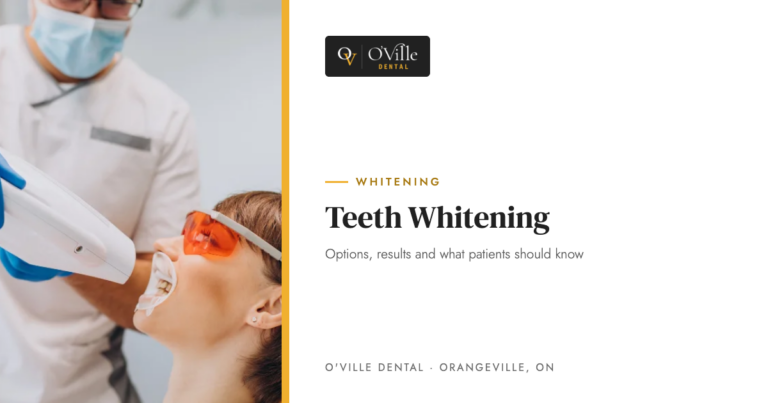
Teeth whitening is a cosmetic dental treatment designed to lighten the appearance of stained or discoloured natural teeth. Adults considering professional whitening often want to know which treatment options are available, what results may be possible, whether whitening is safe and how to maintain a brighter smile afterwards.
Teeth whitening is a cosmetic dental treatment that uses whitening agents to reduce certain types of tooth staining and lighten the appearance of natural teeth.
Tooth discolouration can develop from coffee, tea, red wine, tobacco, natural ageing, some medications, trauma and certain dental conditions. Not every type of discolouration responds equally to whitening. A dental assessment can help determine whether whitening is appropriate and whether the staining is likely to respond to treatment.
What Is Teeth Whitening?
Teeth whitening lightens the appearance of natural teeth by reducing certain types of staining and discolouration. It may be useful for some surface stains and age-related colour changes, but it does not treat decay, gum disease, infection or every cause of tooth discolouration.
The American Dental Association’s teeth whitening information explains that whitening products are intended to improve the colour of natural teeth and should be used according to professional or manufacturer guidance.
How Teeth Become Stained or Discoloured
Teeth can become discoloured for several reasons, including:
- Coffee and tea
- Red wine and strongly coloured foods or drinks
- Tobacco use
- Natural ageing
- Certain medications
- Fluorosis or developmental changes
- Dental trauma
- Tooth decay or other dental conditions
Extrinsic staining develops mainly on the outer surface of teeth. Coffee, tea, tobacco and coloured foods are common contributors.
Intrinsic discolouration occurs within the tooth structure. It may be related to trauma, developmental changes, medications or other dental conditions. Intrinsic staining may respond differently to whitening and may sometimes require another cosmetic approach.
Whitening Natural Teeth vs Dental Restorations
Whitening agents are intended for natural tooth structure. Existing dental work will not whiten in the same way.
| Type | Response to Whitening |
| Natural teeth | May lighten with appropriate whitening treatment |
| Composite fillings | Do not whiten like natural tooth structure |
| Dental crowns | Do not whiten like natural teeth |
| Veneers | Do not respond to conventional tooth whitening |
| Bridges | Restoration materials do not whiten like natural teeth |
Patients with visible crowns, fillings, veneers or bridges may need a treatment plan that considers colour matching. In some cases, whitening natural teeth first may help guide the shade of later restorative or cosmetic treatment. Learn more about dental crowns and bridges and dental veneers when considering cosmetic options.
How Teeth Whitening Works
Professional whitening uses whitening agents to reduce certain types of tooth staining and lighten natural tooth structure. The treatment does not remove every cause of discolouration and is not a substitute for treating cavities, gum disease, cracked teeth or other dental problems.
Health Canada has published safety requirements for tooth whitening products containing peroxide. A dental assessment helps determine whether whitening is suitable before treatment begins.
Professional Teeth Whitening Options
Professional teeth whitening may be provided as an in-office treatment, a take-home treatment plan or a combination of both. The appropriate option depends on the type of staining, tooth sensitivity, existing dental work and the patient’s goals.
In-Office Whitening
In-office whitening is a professionally supervised treatment completed at a dental practice. It may involve:
- A professional assessment before treatment
- Application of a professional whitening product
- Protection of gums and surrounding tissues
- Controlled treatment conditions
- Monitoring by the dental team
- Post-treatment guidance
The exact protocol varies between dental practices and whitening systems. In-office whitening does not guarantee a particular shade change or outcome.
Take-Home Whitening Kits
Professionally provided take-home whitening kits can offer a more gradual approach. They may include:
- Custom or professionally selected trays where appropriate
- Whitening gel supplied according to the treatment plan
- Instructions for application
- Treatment over a period set by the dental provider
- Follow-up or review where appropriate
Take-home whitening kits should be used exactly as instructed. Using more product or extending treatment without guidance may increase the risk of sensitivity or gum irritation.
In-Office vs Take-Home Whitening
| Factor | In-Office Whitening | Take-Home Whitening |
| Treatment location | Dental practice | At home |
| Supervision | Direct professional supervision | Patient follows professional instructions |
| Treatment approach | Professionally delivered treatment | More gradual treatment approach |
| Convenience | Requires a dental appointment | Completed at home |
| Customisation | Based on clinical assessment | May use professionally provided trays or products |
| Best choice | Depends on staining, goals and suitability | Depends on staining, goals and suitability |
Neither option is universally better. A dentist can explain the advantages, limitations and expected treatment approach for your situation. For information about available professional teeth whitening, speak with a dental provider after an assessment.
Over-the-Counter Whitening Products
Store-bought whitening products may include whitening strips, whitening toothpaste, gels and other consumer products. Their effectiveness varies. Some products may mainly address surface stains, while deeper discolouration may respond differently.
Talk to a dental professional before using whitening products if you have tooth sensitivity, restorations, cavities, gum concerns, damaged teeth or unexplained colour changes.
Benefits and Expected Results of Teeth Whitening
Teeth whitening can reduce certain stains and make natural teeth appear lighter, but results vary between patients. The original tooth shade, type of staining, treatment method and lifestyle habits can all affect the outcome.
Brighter-Looking Smile
Whitening may reduce certain stains and make natural teeth look brighter. It should not be expected to create an identical result for every patient or to whiten every tooth evenly.
Treatment for Certain Types of Staining
Professional whitening is often considered for some forms of surface and age-related staining. Intrinsic discolouration, trauma-related darkening or staining associated with dental conditions may respond differently. Alternative treatment may sometimes be more suitable.
Professional Assessment
An assessment can help identify whether whitening is appropriate or whether another dental treatment should be addressed first. This may include treating decay, gum problems or a damaged tooth before any cosmetic whitening is considered.
Individual Results Vary
Teeth whitening results can be influenced by:
- Original tooth shade
- Type and severity of staining
- Age
- Dental history
- Whitening method
- Following take-home instructions
- Diet and lifestyle habits
Tooth Sensitivity and Gum Irritation
Temporary tooth sensitivity or gum irritation can occur with whitening treatment. Following professional instructions can help reduce these concerns. Contact your dental provider if sensitivity is severe, persistent or concerning.
How Long Do Teeth Whitening Results Last?
Whitening results are not permanent. Their longevity may be affected by diet, tobacco use, oral hygiene, natural ageing and repeated exposure to staining foods and drinks. Some patients may benefit from maintenance whitening, but the timing and approach should be individualised.
How to Prepare for Teeth Whitening
A dental assessment before whitening helps identify whether your teeth and gums are suitable for cosmetic treatment. Whitening should not be used to mask an untreated dental problem.
Dental Assessment Before Whitening
A dentist may assess for:
- Cavities
- Gum disease
- Cracked or damaged teeth
- Existing restorations
- Tooth sensitivity
- Existing discolouration
- Other dental conditions that may affect treatment
Regular check-ups, cleanings and preventive dental care can help identify oral health concerns before whitening is considered.
Discuss Sensitivity and Dental History
Tell your dental provider if you have:
- Sensitive teeth
- Previous whitening sensitivity
- Gum concerns
- Extensive dental restorations
- Dental trauma
- Existing dental treatment
This information helps the dental team recommend an appropriate approach or explain when whitening should be delayed.
Understand Your Treatment Plan
Before treatment, ask about:
- Which whitening method is being recommended
- How the treatment is performed
- How long the treatment is expected to take
- What results may reasonably be expected
- Possible side effects
- How maintenance works
Preparation requirements differ between whitening systems. Follow the instructions provided for your specific treatment plan.
How to Maintain Teeth Whitening Results
Maintaining teeth whitening results depends on oral hygiene, lifestyle habits and ongoing dental care. Whitening results naturally fade over time.
Maintain Good Oral Hygiene
Support your oral health by:
- Brushing regularly
- Cleaning between teeth
- Attending routine dental examinations
- Receiving professional cleanings when recommended
Good oral hygiene helps manage plaque and surface staining, but it does not permanently preserve a particular tooth shade.
Limit Repeated Staining
Coffee, tea, red wine, dark sauces and tobacco products can contribute to repeated staining. You do not need to permanently eliminate these items, but limiting repeated exposure and maintaining good oral hygiene may help reduce new surface stains.
Follow Professional Whitening Instructions
For take-home whitening kits, follow the dental provider’s instructions. Do not use excessive whitening gel or extend treatment unnecessarily. Contact the practice if you have concerns about sensitivity or irritation.
Consider Maintenance Whitening
Some patients use periodic maintenance whitening, depending on the original treatment, the type of staining and professional recommendations. A fixed maintenance schedule is not appropriate for every patient.
Continue Regular Dental Visits
Regular dental care supports oral health and allows dentists to identify new staining, decay, gum problems, sensitivity or restoration concerns. A Family Dentist in Orangeville can help you maintain your oral health while discussing suitable cosmetic treatment options.
Teeth Whitening in Orangeville
Adults considering teeth whitening in Orangeville should look for a dental provider who can assess the cause of discolouration and explain whether whitening is appropriate.
A professional consultation can help patients understand:
- Whether the type of staining may respond to treatment
- Professional teeth whitening options
- In-office whitening and take-home whitening kits
- Sensitivity concerns
- Existing crowns, fillings, veneers or bridges
- Realistic teeth whitening results
- Maintenance guidance
- Alternatives for stained teeth treatment
Not every person is automatically suitable for whitening. An assessment can determine whether professional teeth whitening, a different cosmetic option or treatment for an underlying dental concern is the appropriate next step.
Teeth Whitening Cost Considerations
The cost of teeth whitening depends on the treatment method and whether assessment or additional dental care is needed first. Avoid relying on general price estimates because every treatment plan is different.
Cost factors may include:
- Initial dental examination
- In-office whitening
- Professionally provided take-home whitening kits
- Custom trays where applicable
- Maintenance treatment
- Treatment of cavities or gum concerns identified before whitening
- Replacement or treatment of visible restorations where colour matching is a concern
Ask the dental practice for a treatment-specific estimate and a clear explanation of what is included. Insurance or benefit coverage varies, and cosmetic whitening may not be covered by every plan.
Considering Teeth Whitening?
Teeth whitening may be a suitable option for adults with certain types of staining or discolouration. A professional consultation can help you discuss your desired shade, tooth sensitivity, existing dental work, staining concerns and preferred treatment approach.
Arrange a teeth whitening consultation to find out whether in-office whitening or take-home whitening kits may be appropriate for your smile.
Frequently Asked Questions
How does teeth whitening work?
Teeth whitening uses whitening agents to reduce certain types of tooth discolouration and lighten natural tooth structure. Different stains respond differently, and results vary between patients. Crowns, fillings, bridges and veneers do not whiten like natural teeth, so a dentist may need to consider existing restorations when planning treatment.
How long do teeth whitening results last?
Teeth whitening results are temporary and vary according to diet, oral hygiene, tobacco use, natural ageing and exposure to staining foods and drinks. Some patients may benefit from maintenance whitening, but the appropriate approach depends on the original treatment and individual oral-health needs. A dental provider can recommend a suitable maintenance plan.
Is professional teeth whitening safe?
Professional teeth whitening is an established cosmetic dental treatment when it is appropriately selected and used according to professional instructions. Temporary tooth sensitivity or gum irritation can occur. Whitening is not completely risk-free, which is why an assessment and clear instructions matter. Contact your dental provider if sensitivity is severe, persistent or concerning.
Is teeth whitening suitable for everyone?
Teeth whitening is not automatically suitable for every patient. A dentist should consider cavities, gum health, tooth sensitivity, restorations, dental trauma, existing dental conditions and the cause of discolouration before treatment. Whitening may need to be delayed if dental treatment is required first, or another cosmetic option may be more suitable.
How can I maintain my teeth whitening results?
Maintain whitening results with consistent brushing, cleaning between teeth, regular dental visits and professional cleanings when recommended. Limiting repeated exposure to staining drinks, dark foods and tobacco can also help. Follow any professional maintenance instructions and avoid using whitening products more often than recommended. Results naturally fade over time, and maintenance needs vary between patients.