

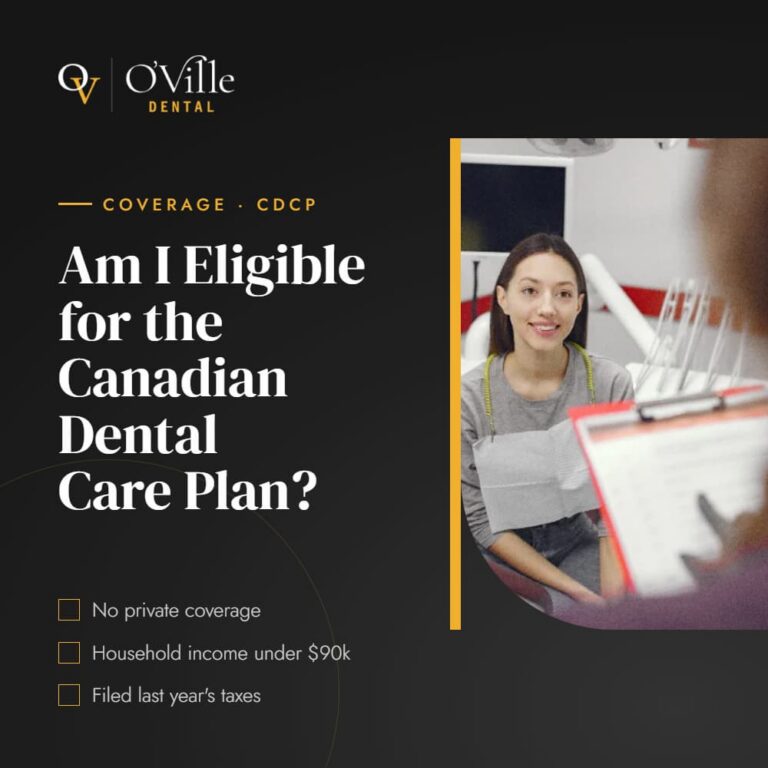
Canadian Dental Care Plan eligibility determines whether a Canadian resident can receive dental coverage through the federal program. Applicants must meet requirements involving residency, tax filing, adjusted family net income and access to private dental insurance. Eligibility is different from coverage, so qualifying does not mean every procedure or the full cost of treatment will be covered.
What Is Canadian Dental Care Plan Eligibility?
Canadian Dental Care Plan eligibility refers to the requirements someone must meet to qualify for the federal Canadian Dental Care Plan, commonly known as the CDCP. Eligibility is based on government criteria rather than a person’s need for dental treatment alone.
The CDCP is intended to make eligible oral healthcare services more accessible to Canadian residents who do not have access to private dental coverage. According to the current Government of Canada CDCP eligibility requirements, applicants must:
- Have no access to private dental insurance or coverage
- Have filed the required Canadian income tax return
- Have an adjusted family net income below $90,000
- Be Canadian residents for tax purposes
Applicants must satisfy all four conditions. Having a low income, being uninsured or needing expensive dental treatment does not automatically establish eligibility.
It is also important to separate eligibility from coverage. An eligible person may be enrolled in the CDCP, but individual treatments remain subject to the plan’s coverage rules, frequency limitations, preauthorization requirements and established fees.
Who Qualifies for Canadian Dental Care Plan Eligibility?
A person may qualify for the Canadian Dental Care Plan when they meet all current residency, tax, income and insurance requirements. Eligibility depends on the applicant’s complete circumstances, including access to coverage through a spouse, common-law partner or family member.
Canadian residency requirements
Applicants must be Canadian residents for tax purposes. Where applicable, the residency and tax circumstances of a spouse or common-law partner may also be relevant when the government assesses family income.
Being physically present in Canada does not necessarily establish residency for tax purposes. Applicants who are unsure about their tax residency should consult the Canada Revenue Agency or another qualified source before applying.
Tax filing requirements
The applicant and their spouse or common-law partner, if applicable, must have filed their Canadian income tax returns for the previous year. They must also have received their notices of assessment before applying.
Tax information is used to calculate adjusted family net income and verify whether the household meets the program’s income requirement. A person who has little or no income may still need to file a tax return before becoming eligible.
Adjusted family net income
Under the rules current on August 21, 2026, adjusted family net income must be below $90,000. This calculation considers family income, not only the income of the person who needs dental care.
Applicants should use the government’s calculation rather than relying on salary, take-home pay or an informal household estimate.
No access to private dental coverage
An applicant cannot have access to private dental insurance or coverage through:
- Their employer or pension
- A spouse’s or family member’s employer or pension
- A professional or student organization
- An individually purchased dental plan
- A health spending account that covers dental expenses
- Supplementary or top-up dental insurance
A person may be considered to have access even if they declined the plan, have never used it, must pay a premium or would still have significant out-of-pocket expenses.
A limited exception may apply to a retired person who opted out of pension-based dental coverage before December 11, 2023 and cannot opt back in. Applicants should confirm whether this exception applies directly with the Government of Canada.
Coverage through a federal, provincial or territorial government social program is treated differently. Someone receiving dental assistance through a government program may still qualify for the CDCP, with the programs coordinating benefits to prevent duplicate payments.
What Income Requirements Affect Canadian Dental Care Plan Eligibility?
Income affects both Canadian Dental Care Plan eligibility and the percentage of eligible costs the plan may pay. An applicant’s adjusted family net income must currently be below $90,000.
Adjusted family net income generally includes the applicant’s family net income and that of their spouse or common-law partner, where applicable. Certain Universal Child Care Benefit and Registered Disability Savings Plan amounts are subtracted or added when calculating the final figure.
Does income affect Canadian Dental Care Plan eligibility?
Yes. Adjusted family net income determines whether someone meets the income requirement and whether a co-payment applies. People in higher qualifying income ranges are responsible for a larger percentage of CDCP-established fees.
| Adjusted family net income | CDCP contribution toward established fees | Patient co-payment |
| Below $70,000 | 100% | 0% |
| $70,000 to $79,999 | 60% | 40% |
| $80,000 to $89,999 | 40% | 60% |
| $90,000 or more | Not eligible under current rules | Not applicable |
These percentages apply to eligible services based on fees established by the CDCP. A 0% co-payment does not always mean treatment is free.
Patients may have additional expenses when:
- The dental provider charges more than the CDCP-established fee
- The procedure is not covered
- The treatment exceeds a frequency limitation
- Required preauthorization has not been approved
- The patient agrees to an alternative service not covered by the plan
The income ranges and co-payment percentages should be confirmed using the latest Government of Canada CDCP cost and coverage information before treatment.
How Do You Apply for the Canadian Dental Care Plan?
Canadians can apply through the current Government of Canada application process. Applicants should check their eligibility, prepare the necessary personal and tax information, submit an official application and wait for confirmation that their coverage is active.
- Check your eligibility. Review all four CDCP requirements before starting an application. Do not apply based only on income or the absence of a dental insurance card. Check whether you could access coverage through an employer, pension, spouse, common-law partner, professional organization or health spending account.
- Confirm your tax information. The applicant and their spouse or common-law partner, if applicable, must have filed the previous year’s Canadian tax returns and received their notices of assessment. Information required during the application may include your full name, date of birth, Social Insurance Number (if available for children), home and mailing address, details of a spouse or common-law partner, information about government social dental coverage, and relevant tax information.
- Apply through the official government process. Applications for the 2026–2027 benefit year are currently open. Applicants can use My Service Canada Account or the official Canada.ca application service. People who cannot apply online can contact Service Canada by phone. Always begin through the official Canadian Dental Care Plan application page. There is no fee to apply for or renew CDCP coverage. Be cautious of advertisements, messages or websites requesting payment, banking details or credit card information to complete an application.
- Receive your enrolment information. After an application is reviewed, eligible applicants receive enrolment and coverage information. Check the stated coverage start date before receiving treatment. Submitting an application does not mean that coverage is immediately active. Applicants must also renew their participation and confirm their eligibility each year.
- Confirm your dental provider and coverage. Before booking treatment under the CDCP, confirm that the dental practice can submit claims to the plan. The provider should also verify that your coverage is active and review whether the proposed treatment is eligible.
Patients looking for ongoing care can contact a family dentist in Orangeville or explore available family dental services. Parents can also learn more about care from a children’s dentist in Orangeville.
O’Ville Dental accepts the CDCP. O’Ville Dental is a general dentistry practice, and our dentists are general practitioners rather than specialists. Some CDCP-covered services, such as certain specialist examinations or more complex oral surgery, may require a referral to a specialist. Participation by the practice does not guarantee that a particular patient or procedure will qualify. Coverage and potential patient costs should be confirmed before treatment.
What Dental Services Can the CDCP Cover?
The CDCP can help pay for certain preventive, diagnostic and treatment services. Coverage depends on the type of service, the patient’s circumstances, frequency limits, clinical criteria and whether preauthorization is required.
The current Canadian Dental Care Plan Dental Benefits Guide includes the following general service categories.
Diagnostic services may include complete, recall, emergency or specific examinations, certain specialist examinations, dental X-rays, and eligible laboratory tests. The number and frequency of examinations or X-rays covered may be limited.
Preventive services may include polishing, fluoride treatments, dental sealants for eligible teeth and age groups, and selected treatments intended to prevent or control tooth decay. Families interested in ongoing preventive care can review the practice’s family dental services. The dental team can explain which recommended services may be eligible under the CDCP.
Restorative and endodontic services may include fillings, treatment for tooth decay, trauma or pain, root canal treatment, and certain crowns, posts and cores. Some restorative procedures, including many crowns, require preauthorization and are subject to clinical criteria and frequency limits.
Periodontal services treat the gums and supporting structures around the teeth. Eligible services may include scaling, root planing, non-surgical gum disease management, certain treatments for periodontal abscesses, and selected post-surgical evaluations.
Prosthodontic services may cover certain services used to replace missing teeth, including complete dentures, temporary dentures, partial dentures, denture repairs, and relines and rebases. Some denture services require preauthorization.
Oral surgery services may include removal of teeth or retained roots, certain surgical incisions, treatment involving eligible tumours or cysts, and selected treatment for jaw fractures.
Sedation services, including certain sedation or anaesthesia services, may be covered when the CDCP’s clinical and authorization requirements are met. Coverage may include nitrous oxide, oral sedation and selected deeper forms of sedation. Preauthorization may be required. The suitability of sedation must be assessed by a qualified dental professional, and clinical and regulatory requirements can vary by patient, procedure and jurisdiction.
Important coverage limitations. Not every dental service is covered. Some procedures require approval before treatment, and not every preauthorization request will be accepted. As of August 21, 2026, orthodontic services were not yet available through the CDCP. The government states that a limited range of orthodontic services will become available at a future date and will require preauthorization.
Before starting extensive care, patients should ask:
- Is the proposed procedure covered?
- Is preauthorization required?
- Does a frequency limit apply?
- What is the CDCP-established fee?
- Does the provider charge more than that fee?
- What co-payment or additional amount will I pay?
Can You Use Private Insurance and the CDCP Together?
Generally, a person cannot qualify for the CDCP if they have access to private dental insurance. Access through employment, a pension, a family member, a professional organization or an individually purchased policy can make someone ineligible.
Can I qualify for the CDCP if I have dental insurance?
Usually, no. An applicant must not have access to private dental coverage. This rule may apply even if the person has not enrolled, has never submitted a claim, must pay premiums or would not have the entire cost of treatment covered.
Applicants should check their T4 and T4A slips for information about employment or pension-based dental benefits. They should also review the benefit options available to a spouse or common-law partner.
Government social dental programs are not necessarily treated as private insurance. A person receiving provincial, territorial or federal social dental benefits may still qualify, with the programs coordinating payment where appropriate.
How Can You Check Your CDCP Eligibility?
You can conduct a preliminary eligibility check by reviewing your residency, tax filing, family income and access to private coverage. Service Canada makes the official eligibility determination.
Use this checklist before applying:
- Confirm that you are a Canadian resident for tax purposes
- Ensure you have filed the required Canadian tax return
- Ensure your spouse or common-law partner has filed, if applicable
- Locate your notice of assessment
- Calculate your adjusted family net income
- Confirm that the amount is below the current eligibility limit
- Review employment and pension benefits
- Check coverage available through a spouse or family member
- Review professional or student organization benefits
- Check whether a health spending account covers dental expenses
- Read the latest Government of Canada requirements
- Apply through the official government process
- Wait for confirmation of your coverage start date
- Confirm the provider can submit CDCP claims
- Request an estimate of co-payments and additional fees
This checklist does not replace the government’s assessment. Eligibility rules can change, so confirm the requirements before every application or renewal.
What If You Need Emergency Dental Treatment?
Do not delay urgent dental care solely because you are uncertain about CDCP coverage. Contact a dental provider, describe your symptoms and ask what steps you should take.
If you need prompt care, contact an emergency dentist in Orangeville and explain whether you are enrolled in the CDCP. The dental team can assess the clinical concern, verify available coverage and discuss potential costs before proceeding whenever circumstances allow.
Emergency treatment expenses depend on the examination, necessary X-rays, diagnosis and procedure performed. The guide to emergency dentist costs in Orangeville explains the factors that can influence urgent dental care costs.
Severe facial swelling, difficulty breathing, uncontrolled bleeding or other potentially life-threatening symptoms require immediate emergency medical attention.
Confirm Your Eligibility and Costs Before Treatment
Canadian Dental Care Plan eligibility depends on meeting all current program requirements. Income is an important factor, but applicants must also meet residency and tax-filing requirements and have no access to private dental coverage.
Qualifying does not mean every service or the full cost of treatment will be paid. Co-payments, provider fees, frequency limitations, exclusions and preauthorization requirements may lead to out-of-pocket expenses.
If your CDCP coverage is active, contact O’Ville Dental, a general dentistry practice, to discuss your dental needs and confirm whether the proposed services may be covered. The practice can verify coverage and provide an estimate, but it cannot guarantee government eligibility or payment.
Frequently Asked Questions
What Is Canadian Dental Care Plan Eligibility Based On?
Canadian Dental Care Plan eligibility is based on Canadian tax residency, filing the required tax return, adjusted family net income and access to private dental insurance. Applicants must satisfy all four requirements. Eligibility is not determined only by income or the need for treatment, and Service Canada makes the official decision after reviewing an application.
Who Meets Canadian Dental Care Plan Eligibility Requirements?
A person may qualify when they are a Canadian resident for tax purposes, have filed the required tax return, have adjusted family net income below $90,000 and do not have access to private dental coverage. Relevant family circumstances, including a spouse’s income and insurance options, may affect whether the complete requirements are met.
Does Income Affect Canadian Dental Care Plan Eligibility?
Yes. Adjusted family net income affects both eligibility and cost-sharing. Under current requirements, family income must be below $90,000. Applicants with income between $70,000 and $89,999 have a percentage-based co-payment. Additional charges may still apply in every income range when provider fees exceed CDCP-established fees or services are not covered.
How Can I Check My Canadian Dental Care Plan Eligibility?
Review the official Government of Canada eligibility information and check your tax residency, tax filing, adjusted family net income and access to private dental insurance. Include coverage available through an employer, pension, spouse, family member or organization. This preliminary review can help, but Service Canada must make the official eligibility determination.
Can Children Qualify Under Canadian Dental Care Plan Eligibility?
Yes. Children may qualify when they and their family meet all applicable CDCP requirements. A parent or guardian should review the household’s tax filing, adjusted family net income, residency and access to private dental coverage. After enrolment, the family should confirm whether each recommended service is covered before visiting a children’s dentist in Orangeville.
References
- Government of Canada. Canadian Dental Care Plan: Do You Qualify? Accessed August 21, 2026.
- Government of Canada. Canadian Dental Care Plan: Apply Accessed August 21, 2026.
- Government of Canada. Canadian Dental Care Plan: What Is Covered Accessed August 21, 2026.
- Government of Canada. Canadian Dental Care Plan Dental Benefits Guide Effective April 1, 2026. Accessed August 21, 2026.
Disclaimer: This article provides general educational information and does not constitute individualized medical, dental, financial or legal advice. CDCP eligibility, benefits and application requirements may change. Consult current Government of Canada information and a qualified dental professional for guidance based on your circumstances.