

Introduction
What to Expect in the First Few Weeks? Tooth loss can happen gradually or all at once, and most people don’t feel fully prepared for it either way. If you’re researching dentures — for yourself or someone in your family — this guide covers the main types available, what the fitting process involves, and what daily life with dentures actually looks like. No pressure, no sales language. Just the information you need to make a good decision.
Full Dentures vs. Partial Dentures — What's the Difference?
Full Dentures
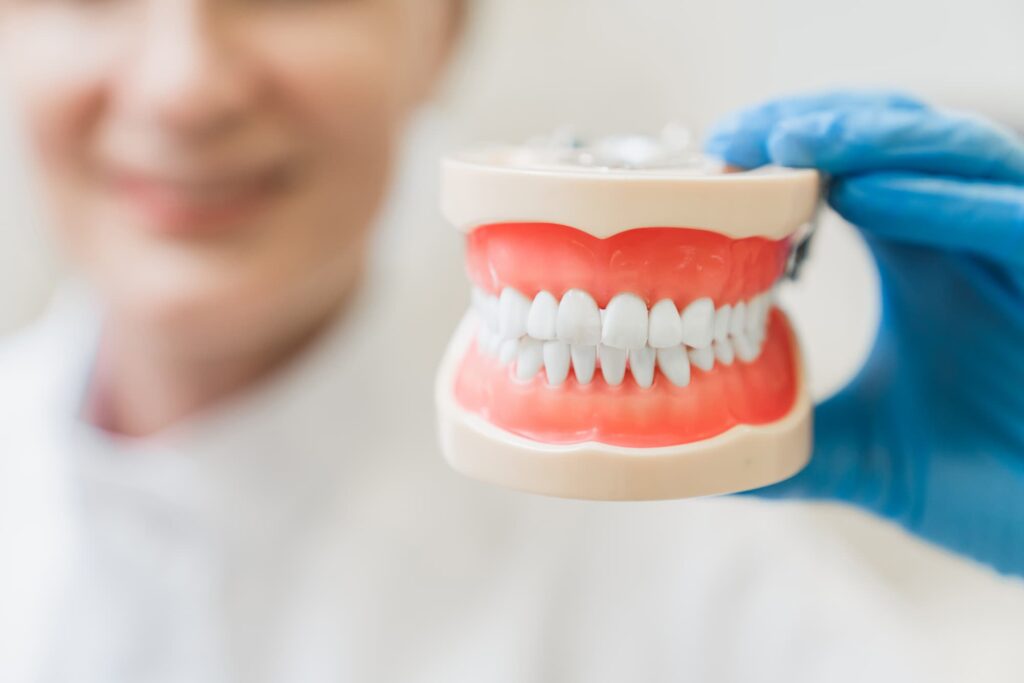
Full dentures replace all of the teeth on the upper arch, the lower arch, or both. They rest on the gum tissue and stay in place through suction and the natural shape of the mouth. They’re the appropriate option when all teeth in an arch have been removed or need to be removed.
Partial Dentures
Partial dentures are used when some natural teeth remain. They fill the gaps left by missing teeth and are supported by the remaining teeth through clasps or precision attachments. A partial also prevents the remaining teeth from drifting into the empty spaces over time.
There’s also a third option worth discussing at a consultation: implant-supported dentures. These attach to implants placed in the jaw bone rather than resting on the gum, which provides considerably more stability. The process is more involved, but for patients who want a more secure fit, it’s a meaningful alternative. Your dentist will tell you honestly whether it’s suitable for your situation.
What Does Getting Dentures Involve?
Assessment
The first step is a clinical exam, including X-rays, to understand the current state of your teeth, gums, and jaw bone. If extractions are needed first, those are planned at this stage and the overall timeline is mapped out.
Impressions and measurements
Once the mouth is ready, your dentist takes detailed impressions and measurements. These go to a dental lab, where your dentures are custom fabricated. You’ll also choose the shade and shape of the teeth at this stage.
Trial fitting
Before the final dentures are finished, a wax trial version is fitted. This gives your dentist a chance to check the bite, aesthetics, and fit and make adjustments before the final product is produced.
Fitting and follow-up
When your dentures are ready, they’re fitted and any immediate adjustments are made. Follow-up visits to fine-tune the fit are a normal part of the process. Most patients need at least one or two adjustments in the early weeks, and that’s expected.
What to Expect in the First Few Weeks
The adjustment period is real, and going in with realistic expectations helps, and our first month guide covers this stage in more detail. Most patients find that speaking and eating feel noticeably different at first. Certain sounds may take a few weeks of practice, and starting with softer foods is usually recommended before gradually reintroducing a normal diet.
Some soreness and minor irritation in the early weeks is common as gum tissue adapts to the new appliance. This isn’t a sign that something has gone wrong. If soreness persists or the fit feels significantly off, come in sooner rather than later — adjustments are much easier to make early.
Over time, the jaw bone and gum tissue naturally change after tooth loss. This means dentures that fit well initially may need relining or adjustment as years pass. Regular check-ups let your dentist catch this before fit becomes a problem.
How to Care for Dentures Day to Day
The daily routine is straightforward:
- Remove and rinse dentures after eating, and know what to do if something happens to your denture between visits
- Brush them daily with a soft brush and denture cleaner — regular toothpaste is too abrasive and can scratch the surface
- Soak dentures overnight in water or a denture solution to prevent warping
- Keep attending regular dental appointments so your dentist can monitor fit and check gum tissue health
With consistent care, dentures typically last 5 to 10 years before replacement is needed. The timeframe varies depending on how much the underlying bone and tissue change over that period.
Are There Alternatives Worth Considering?
For patients who want a permanent solution, dental implants are the main alternative. An implant integrates with the jaw bone and supports a crown or full-arch restoration without resting on the gum. Implants also help preserve bone that would otherwise gradually resorb following tooth loss.
For patients missing just a few teeth where strong natural teeth remain on either side, a dental bridge may be worth exploring. Your dentist can walk through the practical differences at a consultation.
Thinking About Dentures? Start With a Conversation
A consultation is the right first step. Your dentist will assess your teeth and jaw, explain which type of denture is appropriate, and walk through what treatment realistically involves before anything is committed to.
O’ville Dental serves patients in Orangeville and the surrounding area, including Shelburne, Caledon, Mono, and Amaranth. Reach out whenever you’re ready.